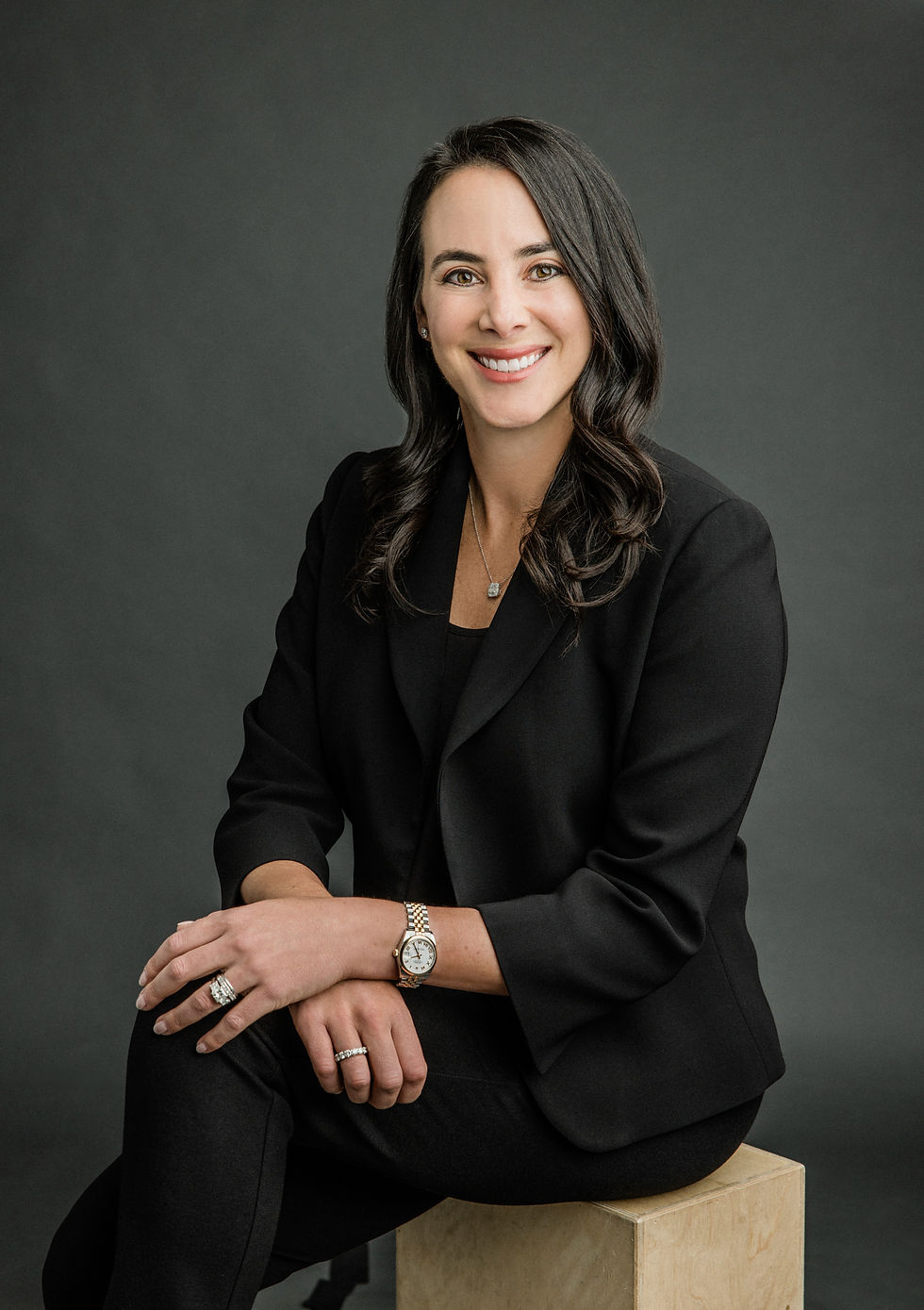
End-of-Life Talk with Attorney Brittany Cook
Estate planning attorney Brittany Cook helps people get their legal affairs in order before they die, and in this episode she and Sarah dig into everything you need to know about wills, trusts, powers of attorney, executors, and why it's never a "set it and forget it" exercise. Brittany breaks down what happens when someone dies without a plan, why communicating your wishes matters just as much as the paperwork itself, and how to manage who gets access to your online accounts after you're gone. Brittany also shares tips for actually starting these conversations and the three most important things you can do — right now — to protect your loved ones.
Transcript
Brittany Cook: If everyone on this podcast takes away one thing: communication. It takes the angst out of what is an already emotional time. Being able to understand and know what's coming, and what's here, and why those decisions were made —ahead of time — takes off the additional strife of losing a loved one.
[00:00:22] Sarah Cavanaugh: Welcome to Peaceful Exit, the podcast where we talk to creatives about death, dying, grief, and also life. I'm Sarah Cavanaugh, and my guest today is estate planning attorney Brittany Cook. Brittany helps people get their legal affairs in order before they die, and in this episode, she and I dig into everything you need to know about wills, revocable trusts, powers of attorney, executors, and why it's never a “set it and forget it”exercise. Brittany breaks down what happens when someone dies without a plan, why communicating your wishes matters just as much as the paperwork itself, and how to manage who gets access to your online accounts after you're gone. Brittany also shares tips for actually starting these conversations, and the three most important things you can do — right now — to protect your loved ones
Hi Brittany, welcome to Peaceful Exit.
[00:01:23] Brittany Cook: Hi, Sarah. Thank you so much for having me
[00:01:25] Sarah Cavanaugh: I am so excited to create an episode that we can sort of share what's legally needed so we can facilitate a peaceful exit for our listeners. When people hear the phrase estate planning, many assume it's only for wealthy families. What's the biggest misconception people have about this process?
[00:01:43] Brittany Cook: It is not only for wealthy, and even more important, it is not only for the elderly. Everyone after age of 18 needs to pay attention to this, and it's really for anyone who owns anything and really loves anybody. I also think one of the biggest misconceptions, and I have this even with my wealthiest clients, is it's not just a “set and forget.” You don't do these documents at age 40, if you're on top of things, and not look at them again until you die, hopefully at, at age 95. It is a living, breathing plan, and things change. If you are young, you are just married, you don't have kids, and you think of an estate plan, it's very different from what happens when you potentially have seven grandkids or maybe even great-grandkids. Your perception of life is going to change, hopefully, maybe your wealth, like the amount of things you've kept. But you're also gonna have a different mindset and different people you wanna take care of and people you want to rely on. You know, the people you pick to kind of shepherd your estate through may be very different now than it was 20 years ago when you first signed your documents. So it's never a set and forget.
[00:02:52] Sarah Cavanaugh: Yeah, that's a really good point, and asking those people to do those things for you is difficult in the first round, but changing those people — I never thought about that, but actually, you know, going to those people and saying, "You know, I asked you to do this. I'm now, you know, shifting my focus," that'd be a super interesting conversation.
[00:03:10] Brittany Cook: Yeah, I'd, I'd say it's 50/50 whether or not some people — you know, we go over and they're like, "I haven't talked to that guy in 15 years." So that guy doesn't need to be told he's not doing it anymore. I think there's some sort of inference at some point. It's the saddest but also the, the funniest is like, "Oh, they died." You know, like, "They died how long ago?" "Oh, 17 years ago." And you didn't, you didn't remember? Like, it, they're pretty important to your plan and, and you forgot they died or they're divorced — like, there's always some rationale. Or they moved out of the country. That's a big one now. There's people kind of traveling all over, or, or they just live across the country. They can't possibly handle my stuff in Philadelphiaor New York if they're living in Seattle. I don't know if you necessarily have to tell somebody that they are no longer in that role unless you have constant contact with them and you're always talking about it.
[00:03:55] Sarah Cavanaugh: Well, what we talk about at Peaceful Exit is gathering those people once a year and actually updating them on your life. Walk us through the difference between what happens to someone who dies with their wishes deeply, clearly documented, everything's in place, versus when they leave no plan at all.
[00:04:13] Brittany Cook: So let's start with when you leave no plan at all. The government tells you where your things go, and it- it's sort of like the family tree, right? If you have a spouse, it will go to your spouse. If you don't have a spouse but you have kids, it will go to your kids. Otherwise, it will go up to your parents, and then it will start looking at your siblings. And it's, it's kind of like the Mr. Deeds movie, if anyone remembers, with Adam Sandler, where he was, like, a fifth cousin of some guy who had no relatives. That's what the government, the state that you live in, will look and say, "Okay, who is Sarah's nearest relative?" And guess what? They're gonna get all of it. The government made the decision for you. Even if you have to write it on a piece, a napkin or a piece of paper and put it somewhere safe, that is better than letting the government decide where your assets should go. Talking to people about it and explaining and communicating and really having a laid out plan takes a lot of the undue burden and emotion off the plate of your family or your friends or whoever is going to be the steward, right? There's a person who's going to be in charge of it. You don't wanna make their life harder if you are going to make decisions that no one expected and no one knew about, that could potentially upset, you know, the apple cart of your family, or whoever you told was going to get something, and then they didn't get it or proportionately. You know, it is freedom of disposition. Everyone can do whatever they want with their estate and their wealth and their tangibles. But it certainly makes a lot of sense to put it out there, communicate that. And you don't have to give numbers. I think that's — we talked about biggest misconceptions. I think you don't need to tell people the value of what they're getting. You do not need to disclose that, unless you are going to monumentally change someone's life and they are not gonna know how to handle managing wealth. That's a different story. But I think for the majority of people, you don't need to say, "You're gonna get $10,000 or $100,000 or $1 million." You just kind of communicate, "These are my wishes. I want everyone to be taken care of. You know, Sarah, I want you to be able to pay for your children to go to college," or, "I want you to be able to have that vacation you've always dreamed of, that we always talked about." Those types of conversations I think are more beneficial, and they mean more, right? That'slike the sentimental, emotional —
[00:06:27] Sarah Cavanaugh: Yeah. That's your, your intention.
[00:06:30] Brittany Cook: Right, what's your intent?
[00:06:30] Sarah Cavanaugh: Could you define just real quickly tangible personal property?
[00:06:33] Brittany Cook: Okay. Think tangible: touch. Anything that is your property, like your jewelry, your art, your handbags. That's tangible personal property, but it's also stuff that people could take out.Your stove is not really tangible. It doesn't come off your wall, but it's part of your home and the home value. The tangible is the art on the wall that could come off.
[00:06:55] Sarah Cavanaugh: Yeah, because I think there is, some people think, "Well, I'm not a wealthy person. I don't have an estate per se," but you might have something tangible that people — even if it's the, you know, the bowl that you made pancakes for your kids and they remember it, you know? It's, it's usually something that's attached sentimentally to the people you love.
[00:07:14] Brittany Cook: Yeah, your heirlooms, right? It's, it's your heirlooms. It's what means something to you. Doesn't mean it's a value for the government to tax you on.
[00:07:21] Sarah Cavanaugh: Talk about why clear and consistent communication is crucial.
[00:07:25] Brittany Cook: If everyone on this podcast takes away one thing: communication. It takes the angst out of what is an already emotional time. Being able to understand and know what's coming and what's here and why those decisions were made ahead of time, takes off the additional strife of losing a loved one. There are families that fight over everything, and if you don't have clear communication telling them why you did what you did, it's not gonna end well. What I want topoint out with communication is there's a couple ways that people do it. Some people don't have the courage to talk to their family or their friends about what they're doing, right? Because maybe they know it's going to be a problem. And, and that's totally fine. You can write it down, we call it a letter of wishes. You can email it. There's now even companies that will record you speaking, and you can have a virtual letter of wishes. You could record a podcast and say, "Hey, this is why I did what I did," that maybe they won't know tilafter you've passed on, but it's still communicating your intent versus a legal document that says, "Sarah, you get X." But it doesn't say, "Sarah, you get X, and this is why I gave you X," right? The “this is why” is not part of the legal document, and that's really important 'cause you wanna make sure it's communicated other ways
[00:08:46] Sarah Cavanaugh: That piece of it, the letter of intent or letter of wishes as you put it, is separate from, I say, the, the, the legal stuff, the legal documents, which you still need to have in place. Many listeners, you know, may not know where to begin. Maybe you begin by recording your wishes, but maybe you begin with a core document. Just, what are the core documents every adult should have in place, and when should they begin this process? And you mentioned after 18. We just had our first grandbaby, so our son and his wife should be paying attention now that they have a child.
[00:09:20] Brittany Cook: Yes, oh, for sure
[00:09:21] Sarah Cavanaugh: So what are those core documents?
[00:09:23] Brittany Cook: Okay, and let's just go back to the age. I say 18 because of kids going to college. Because if something happens to your child in college, you wanna make sure they've got some of these documents so that you can access their stuff because they're adults. Remember, 18 — you're not a kid anymore, your parent doesn't control you. All right. So where do we start? What you need is a last will and testament. Essentially there's three really big things that it does. It names who's in charge of your affairs, that's the executor. It can be more than one person. I recommend odd numbers because you don't want people fighting. If they're even, you need a tiebreaker. But it does work if you have an easy situation and an easygoing family, and you have two siblings that you know are not gonna be killing each other, then it does work. But I do want to preface an odd number is helpful. So that's the executor. That's typically at the beginning of the document. Then it says who gets your property, and what is that property? And then what's also important is if you have minor children, it will say who's going to be the guardian for those children. It may also bifurcate and say who's the guardian, meaning who's gonna live and be legally responsible, but there may be someone else that you name to control the finances. I have seen that before, and that, that's not uncommon. So those, I would say, are the three big things that you'd have in a will. Now, some wills are four pages, some wills are 30 pages if you itemize every single thing in your will to say, "Okay, Sarah gets my engagement ring. Colton, my son, gets my watch." And you can line item all of that in the will. Most people do it as an addendum to the will because that's typically the stuff that changes, and you don't want to have to redo your will all the time. But that's the last will and testament. That's what everyone needs. That prevents the Mr. Deeds situation. What other advisors and practitioners often suggest is a revocable living trust. This is often referred to as the will substitute, and it's funded during your lifetime. It is essentially your personal account of all of your stuff that you can do whatever you want with at any time, but it's sort of in this nice little wrapper, and inside that document, it will direct assets, and it would also come into effect in incapacity. So if, God forbid, you're in a coma or you've got dementia, the revocable trust is still up and running. And that's an important distinction because your last will and testament does not come into effect until you have officially been deceased. Your revocable trust is active from the day you sign it and fund it. And why it's important and why a lot of people prefer to use a revocable trust with a will is because it avoids probate. And probate is your local courts — when you pass away, you have to file with probate. Even if you don't really have a lot of stuff, it's better to get it through the courts. They have to approve what's happening with your assets. Now, if you have 10 bank accounts and they are not titled in a revocable trust, the probate court sees all of it, they know what's in it, they know where it's at, they know who the manager is. Versus if it's in a revocable trust, all they know is there's a trust. That's it. It's a privacy protection, and it goes faster through probate because it's really just one big wrapper with a bunch, potentially a bunch of accounts and assets in them, but probate is not going account by account. So that's the benefit of the revocable trust.
[00:12:45] Sarah Cavanaugh: You're so knowledgeable. I so appreciate that definition of probate because I think what people don't know and why it's so important that people think about this trust idea, even if they don't have a lot of assets, is it keeps it out of the courts. Is the trustee of that living trust someone you have a relationship with, I would assume? And you know this person, and therefore you have more confidence that you will get your wishes met.
[00:13:13] Brittany Cook: Yes. So typically, when you create a revocable trust, you are the trustee of it, which means that you're controlling your destiny really until such time as you're incapacitated or you pass away. And at that point, a successor trustee will come on, and it should be someone you fully trust that understands your wishes, and they will become the trustee of that trust at that point.
[00:13:34] Sarah Cavanaugh: You don't have to worry that it's going to be decided by the state, things are gonna be managed by someone that you know and trust. And I think that's a distinction, 'cause I think when people say, "Do I need a trust?" You would probably say yes.
[00:13:47] Brittany Cook: Yes, I think it makes life easier, but there's people who just think it's additional complication. All right, we've got three more though, 'cause there's a couple more documents we need, and we can't forget it because these, I think, actually are the most important and heart-wrenching. So, there's the durable power of attorney. What this means is if you are incapacitated, if you are going through dementia, if you're in a coma, if you're just even in surgery and you're gonna be down for a while, or if you're, you know, we've got somebody’s power of attorney says that if you've been captured, right? Like, how do, what happens? Or if you're sailing around the world, and literally, we had someone who wanted to get on a boat and sail the world by himself, and we're like, "Okay, well, who's gonna control your stuff?" It's called a durable power of appointment, and that lets someone handle all of your financial and legal matters when you cannot. They will step in and can go to the banks and can do all the stuff, pay your bills, make sure everything's done. It is important to know the durable power of attorney, the financial power of attorney, automatically terminates at death. So that person can't go into a bank and say, "Hey, I was the durable power of attorney for Sarah. Sarah passed away two weeks ago." That's when the executor steps in. So that role officially ceases at death. Then there's the two others, and these are really important. There's the healthcare power of attorney. What is that? So the healthcare power of attorney says that Brittany can access Sarah's medical records so she can make educated decisions and know what's going on when the time comes if Sarah cannot make those decisions. So that's really important.
[00:15:23] Sarah Cavanaugh: That also circles back to being 18 because I think in our state, I think it's maybe younger than that. It might be 14 when parents don't have the access to medical records.
[00:15:35] Brittany Cook: Exactly. So imagine your child's at college or something, and they, God forbid, slip into a coma — like, you want these documents done before your kids go to college. Even if they don't do a will, get the healthcare power of attorney. And then the last one is the living will and advance directive, and what is that? That is documenting your wishes. Do you want to be on life support? Do you want drugs, do you want food? It's like a checklist of, okay, if you're non-responsive and you don't want to be in a vegetative state. Again, it's emotional, but you have to kind of go through it because that's something that if you decide it now, you're taking that burden off of someone to make that decision. That's why that living will is so important, because you essentially are giving them your wishes of what you want to happen at death. It's also organ donation, end of life care, do you want morphine? Those are the types of things. I actually just had one of my first experiences with a Seattle-based family where they want their body to be composted, and they have a document that's part of their entire legal suite that I just mentioned that says, "This is how I want my, my burial to be, I want to be composted." And it takes the burden off of the people who otherwise would be stuck making these decisions if you didn't decide what you wanted to do.
[00:16:47] Sarah Cavanaugh: So what is an executor, and who typically takes on this role in your estate?
[00:16:54] Brittany Cook: So the executor is the legal representative for your entire estate. They are responsible for all of it. They're securing the property when you pass away. They're the ones who should be going to the safe deposit boxes. What's really important is when you pass away, your executor needs to get copies of your death certificate. The more copies of the death certificate you have, the better. That's another really big takeaway today. Always ask for more, because every bank, every custodian, everyone wants to see the copy of the death certificate. What also happens is the executor submits to probate, and they get what's called the letter of executrix. That is what they use to go to the banks and say, "Okay, I'm retitling this account into the estate account or into the beneficiary of Sarah's account." That's what they need from the court that says, check the box. This executor is in fact named executor under the last will and testament, and they have authority to go settle this estate and do what they need to do. The executor is also kind of the gatekeeper, right? If there's a taxable estate, they have to make sure that the taxes are properly filed, both at the state level and the federal level, and make sure the payments are paid. They handle the funeral expenses. They're making sure that all the bills are paid on homes, right? Because an estate doesn't necessarily settle right away. So all of a sudden they're your house manager, and any bills that you accumulated during your life, even your hospital bills, that when you die someone has to pay all those bills, and that's what the executor does.
[00:18:22] Sarah Cavanaugh: Yeah, it also makes me think of your cyber life if you have subscriptions to things and, you know, there's, there's so many little things that we don't necessarily have written down anywhere
[00:18:32] Brittany Cook: Sarah, you — phew, you hit the nail on the head. So what I can tell you is if someone does not know how to access your phone, chances are they can't access 99% of your life. I had a client who by the grace of God, her husband got really sick on a, on a trip. They had just retired. They were lovely people, and he's in the hospital pretty much passing away, and his phone is going nuts. And she says, "I don't even know your password. I can't access your phone." And thank God he gave it to her because every bank account, every frequent flyer mile, everything, every bill was all tied up to the cellphone and the credit cards and the checking account on the phone that if she didn't have the password, she would've been paralyzed. All important passwords, accounts — write it down, hide it, make sure someone knows where it is. I don't wanna harp on it, but it's also, you know, what if you've got a ton of iTunes, or what if you have photos? Those are your property. Who's got access to that? The passwords are key. It's a different world from, you know, our parents. They would never have even thought about this type of stuff.
[00:19:41] Sarah Cavanaugh: So you've said you've seen more people fight over tangibles than over wealth or assets.
[00:19:47] Brittany Cook: What often happens is, okay, mom died. Well, mom gave me her ring six years ago, or mom gave Sarah the piano. Well, really? Like, no, she never told me. Be very open with your kids. If you've given stuff away during your lifetime, make sure everyone knows who got it versus, you know, the sisters got the jewelry and the will says, "All tangible should be split between my two sons and my two daughters," and the jewelry's gone. And they're like, "Well, mom gave it to me, you know, two years ago," or, "She gave it to me on her deathbed." That doesn't help if that's not communicated. Maybe just have a conversation with the people you're giving stuff to to say, "Do you want this?" Because there's a lot of beneficiaries I've seen that are like, "I don't want that. I don't have room for the china." The other thing that I would recommend is put Post-its or little notations on the bottom of stuff around your house, which is not legal, but that's a way to kind of go through the house, and it's great if you do it with your family members. And maybe they say, "No, Mom," like, no one wants that table." Or maybe someone says, "I love that table. It was my favorite table in the house."
[00:20:56] Sarah Cavanaugh: That's so great. I often tell people too, just be aware of what they have written down if they are a person who writes journals or something. Do you want those shredded or do you want your children to read them? And I mean, there's all sorts of things like that to think about as you walk around your house.
[00:21:11] Brittany Cook: That's a great — I never thought about that. Like, get rid of all the stuff that you don't want other people to find.
[00:21:18] Sarah Cavanaugh: So how often should people review and update their documents? And what are some life events that might trigger a revisit to this plan?
[00:21:26] Brittany Cook: In an ideal world, maybe check them every year. I don't think people do that. Every couple years you should be checking your documents to make sure they're still what you want, especially on the tangibles. If you are starting to give stuff away or maybe you're decluttering and downsizing and some of the tangibles that you earmarked aren't part of the big picture. So, you know, God forbid an executor's not running around trying to find a painting that you got rid of 15 years before but never updated your stuff. Also you have to look when there's big life events. Marriage is a big one, divorce. You have to make sure things are updated at divorce. Typically, spouses pick each other as kind of these legal representatives. That changes on divorce. I'd also say I think people start that conversation once they have children. I think it's hard to have a conversation about where your children should go and who should be responsible for them before you even have them. It feels intangible to have a conversation about children that don't exist yet and then to plan for them. So oftentimes when people have a child or adopt a child, you need to make sure that your estate planning documents account for that. Another one is state. If you're moving out of a state that has an estate tax and you maybe planned for it and to a state that doesn't have estate tax, it's worth paying attention. Also, you want your legal documents to be in the state of which you live. Powers of attorney, the living will, there could be nuances in each state. They're not wildly different, but it is worth updating to the state of which your residency is.
[00:22:58] Sarah Cavanaugh: Our son and his wife live in Melbourne, Australia, so they should be updating things based on living out of the country.
[00:23:06] Brittany Cook: Yes, we have clients who travel and have homes in different areas, like all over the world. We tell them to have powers of attorney in each of those countries and states. They don't need wills in each of those countries and states, but you wanna make sure that you have some legal document that says, "Sarah can make the decisions for me if I'm in Australia.” We want to make sure that someone can step in for Sarah and make a healthcare decision or, you know, make financial decisions while she's in the country that she's visiting.
[00:23:31] Sarah Cavanaugh: So if a listener feels completely overwhelmed at this point with everything we've discussed, what are the three most important actions they could take this month to protect their loved ones?
[00:23:44] Brittany Cook: Get a will. And it does not need to be a 30-page document. It should just outline the bare necessities of who's in charge, where you want your assets to go. Doesn't have to be, you know, tangible breakdown, just very basic. Make sure that you have a list somewhere of all your accounts, financial, iTunes, anything that you've been saving stuff in, your credit card access, right? Where do you have credit cards? Where's your homes? How are they insured? Who makes the payments? Where's your mortgage? And again, this doesn't have to be built tomorrow. Like, you know, you're sitting down at your computer to pay your monthly bills, just make a note of things and say, "Hey, you know, this is where all the stuff for the house gets paid out of, this account, and this account, and that account." And then obviously the passwords, because that's the biggest thing. So documenting that type of stuff is really important. And then the last one, talk to a confidant about what you want. Because chances are that confidant is gonna end up being your executor and your power of attorney and that type of stuff. Whether it's your child or your best friend or your spouse, someone needs to have an idea of what you want, even if you're not getting pen to paper yet.
[00:24:54] Sarah Cavanaugh: And even if you haven't made all the decisions, but just to start thinking about it in that first month, like what are those things that you want to even consider? And we have a great resource at Peaceful Exit that has basically a fact sheet that prompts you to fill in all of the kinds of things that you're saying. All the passwords, all the accounts, all the insurance. Again, if there aren't that many things to list, you still need to have someone who knows the passwords. This digital world is just a completely different animal. Have you witnessed an elegant way that a client has spoken to their families? Many people avoid talking about death 'cause they don't want to upset their loved ones. How can someone start these conversations in a way that feels caring rather than terrifying?
[00:25:40] Brittany Cook: I think you kind of do it from the 10,000 feet level. It's easy if it's wealth, right? You build an education plan for your family to talk about wealth and get them ready to inherit wealth. But that's a very different conversation than, "Hey, you know, God forbid I go into a coma or I have stage four cancer, this is what I want." I think that's a very different conversation than educating someone on anticipating wealth inheritance. I'm not always part of it, but if I do talk to a client, I'd maybe say, you know, "Do you have someone close to you and that your kids know that passed away and say, 'Oh, you know, it was really horrible that they didn't tell them what they wanted, or maybe they did. You know, it was, it was great hearing how Britney took care of her mother and the wishes she wanted and, you know, it got me thinking, let's start that conversation.'"
[00:26:30] Sarah Cavanaugh: I have a wonderful friend who said it's not one 200-minute conversation, it's 200 one-minute conversations. What does a peaceful exit mean to you?
[00:26:39] Brittany Cook: From a health perspective, I hope it's not painful and it's not a str — like, there's, there's the benefit of, you know, my 98-and-a-half-year-old grandmother. She withered away, but she eventually went in her sleep versus another one who struggled with cancer. I hope a nice long, I live long and it's quick, and also that I'm not a burden to my family leading up to death and after death. That things are understood what I wanted and easy. There's no strife. You know, Mom made sure everything was tied in T, which I should do considering my career. But I'd love to not be a burden on the health side. You know, God forbid, like, you know, dementia, Alzheimer's. I see my friends dealing with it, and it's just horrible taking care of a parent with those types of things. It's not peaceful for the people taking care of it. I don't wanna be a burden. I guess a peaceful exit to me is not being a burden.
Recent Podcasts