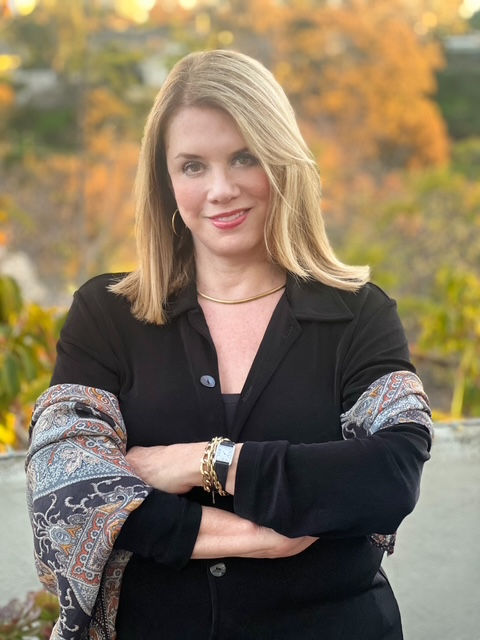
In Lieu of Flowers with Nancy Howard Cobb
When Nancy Howard Cobb wrote "In Lieu of Flowers: A Conversation for the Living" in the year 2000, she was ahead of her time. Little did she know that the cultural appetite for stories about mortality would only continue to grow, and that her book would be republished more than two decades later. In this interview, Nancy explores the deaths of her parents, the loss of a close friend, and the shattering discovery of a marriage built on lies. She also tells Sarah why telling our stories of death and grief may be one of the most vital things we can do.
Transcript
Nancy: I think that that permission to tell your story and to encourage other people to tell theirs — in doing that, we connect as living for as long as we're here to each other, as we honor the dead and bring them back to life.
Sarah: Welcome to Peaceful Exit, the podcast where we talk to creatives about death, dying, grief, and also life. I'm Sarah Cavanagh, and my guest today is writer and journalist Nancy Howard Cobb, author of the book “In Lieu of Flowers.” Nancy's powerful collection of stories about mortality and grief came out more than two decades ago, but has recently been republished with a new introduction and epilogue. In the book, and in our conversation today, Nancy explores the deaths of her parents, the loss of a close friend, and the shattering discovery of a marriage built on lies. We discuss how the cultural appetite for talking about death has evolved over time and why we still struggle to say the word died even after someone has done just that. Nancy also explains why telling our stories of death and grief may be one of the most vital things we can do
[00:01:16] Sarah: Nancy, welcome to Peaceful Exit
[00:01:19] Nancy: Thank you so much, Sarah. And by the way, Sarah Cavanaugh, Cavanaugh's a very Irish name.
Sarah: Well, my husband's, uh, uh, half Irish and half German, and so we'll be on our way to Ireland in August to search out his family, so that'll be fun.
[00:01:33] Nancy: Oh, that's so cool. My grandparents, my mother's parents were born there, so I think I may be going over in August with some Irish friends, so maybe we'll run —
[00:01:40] Sarah: Oh, we'll run into each other somewhere. Well, let's talk about your book. When I read this, I have to say, I kept nodding my head, and I wrote yes in the margins, and all these stories focus largely on grief and death, and it was published 25 years ago. What was the appetite at that time culturally for this kind of book?
[00:01:51] Nancy: I think things have changed so much in terms of, people are still afraid to talk about death. People are still awkward about it because of the euphemisms like passed away, which you will never hear me use. You know, we're born and we die, and what happens in between is, is our life. For instance, I had a whole chapter and I said — Dan Frank was this wonderful editor who unfortunately died, too young at 68 — but when I, I said, listen, I am starting to talk to people about experiences they had with spirits or butterflies or bluebirds, and I don't know what else to do but bullet point it or number these things. I just have to, I can't put this in a cohesive paragraph and make it flow. But I think these stories are very important, and usually people would preface things by saying, I know this is gonna sound weird, but this bluebird flew in my... the window was open. Or, the other day, my college roommate's brother was dying, and I had the kitchen door open, and a mourning dove flew in the kitchen. And I thought, oh, of course, that must be Ken. It’s matter of fact for me now, but then it was, I think for some of the reviewers, a little woo woo, they would say or…but I think what touched people was the universal story of what happens when somebody's dying and how we deal with it, and the closer we get to it and the more we pay attention to our gut instincts, our intuition. It's very much like birth. You know, when you're in that river, as you're giving birth, if you're fortunate enough to do that, it's quite an experience. And then nursing my mother out of the world, which I wasn't able to do with my father. It was a profound experience, and I think that this book is very female.
[00:03:52] Sarah: Let's stick for a minute with the signs from the beyond. You talk about your own and others having these experiences with their loved ones, they feel signs from them or … my mother died 24 years ago, May 10th, which was Mother's Day, and she died of cancer. For a long time, I was kind of searching for what you're talking about. You know, show me a sign that you're okay. Show me a sign that you're at peace. And our childhood home happened to go up for sale, and so my oldest brother and I went to tour our childhood home, I didn't feel anything in the house. But we went out in the yard, and there was a yard shed, right? What did she call it? The garden shed. So you walk in the garden shed, and the first room is the lawnmower and the tools. And then the second door goes into a potting room. And when I opened the door to the potting room, a blast of energy came through my midsection. There was no denying. And it pushed me back into my brother, and I, I couldn't speak, and my throat closed, but I could whisper, "She's here," because I knew it was her. And that potting shed, this tiny little potting shed, was her refuge, And it just felt like she was telling us she was okay. It was such an intense moment for me that it does flip a switch, like you say. You're like, "Oh, I get it. This is not woo-woo." There was no mistaking it for me
[00:05:20] Nancy: What a beautiful experience. I mean, I, my eyes just filled up with tears when you said it because it's so...I've never heard one quite that powerful where the person was moved. I've, I felt some energy with my father after he died But it's so confirming. And when you tell people these stories, they'll go, "You know, well, this thing..." And people get closer, and they start to whisper because it, it seems like it's crazy, but it's, it's not crazy at all.
[00:05:46] Sarah: I love what you say, like the birds lead to butterflies lead to bugs, you know, all of the stories of the natural world that indicate our people are around us. What did you hear from others, their experience of reading your book?
[00:06:02] Nancy: I think people are reassured. I, I have a friend whose daughter just died in a tragic car accident and she was killed instantly. She was a pilot, she was a flyer. And so immediately, Lynn had an experience. We just had a celebration for Natasha's 36th birthday, and she said, you know, reading your book really helped me to make sense of my own grief. It gave me a kind of permission to say, oh, I'm not crazy. I think it's really just relating our stories, which we're less inclined to do in real time, like you and I are doing now. We have these info bites, quick clips of stories. But the actual unfolding of a story, like sitting around in a circle, or being at a kitchen table, or being around a campfire, that's who we are as humans. We're storytellers, and we need to hear other stories. And when we're not hearing these stories, it's all this kind of tidy stuff. Somebody passed away. Well, they certainly, they're around. But I felt this urge to write this book. I don't know where it came from except with the experience with my parents, and then I would be talking to people. And my friend Elaine … Elaine was dying, my mother was dying, and it was just like I was in the, I don't know, maelstrom of these experiences, and I just started to write about it. And it flowed out of me, and then every time I'd … people would say, "What are you working on now?" I'd say, "Well, I'm working on a book about grief and loss." I thought I'd clear the room. Instead, they'd come toward me and say, "Why are you doing that? And let me tell you my story." People are, I say it in the book, it's corny, but I say people are dying to talk, and they are because so many people are nervous about it and about saying anything. And there's no right or wrong thing to say. I mean, it's absolutely tragic. But often I'll say, "Have you had any experiences or signs or whatever it is?" So the mystery and the magic of this, I think, I hope, I do justice to this notion in the book.
[00:08:15] Sarah: How did it feel to return to this material after more than two decades? And is our culture ready for this conversation now? Do you feel it's more, we've come back a little bit more toward an ease around these conversations?
[00:08:25] Nancy: I'll tell you, coming back to it, it's twofold. One is that I did an audiobook, but it's me and me recording the book, which I didn't do the first time around. And I'll tell you, I relived my mother's death, my father's death, and it's not to be whispered. But I'll tell you, revisiting my mother's death and going there, I was with her in hospice. And as I talk to you about it, you know, it's fresh to me now as it was then. I mean, it's not as raw, but when I revisited it, I wasn't acting, but I was in the moment, and with my father's suicide. Yeah, I'm pretty sure now my father had chronic traumatic encephalopathy from playing football at Cornell, this big 6'5" swashbuckler who was a war hero in the Second World War. And so I'm pretty sure that's what he had. And my mom was a chronic insomniac. She never slept. I'm the age she was when she died or almost.
[00:09:20] Sarah: What do you think shifts when you reach the age that your parent dies and you live beyond?
[00:09:26] Nancy: Have you done that already?
[00:09:28] Sarah: My mother, she was 67. I’m almost there and my sister, my sister is there, and I, we've been talking about it, but I, I'm curious what you have experienced
[00:09:39] Nancy: A lot of people have talked to me about that. The younger the parents' deaths, then—
[00:09:43] Sarah: the more profound that,
[00:09:45] Nancy: Yeah, I have a friend whose mother died at 53, but there's no question passing that milestone is …it’s a big deal. And I also think that we have almost on a cellular level in our DNA. My dad died November 15th in '82, and my mom died November 17th '96, and their anniversary was November 10th. When November comes along, I feel this, kind of a disequilibrium, I didn't understand what that was, and then I put this together. And Elaine died just the very end of October. You know, these things stay with us, and I think we carry things we don't even understand that we carry. We're such a literal, linear culture. The other thing I think, Sarah, is that this book is more timely now than it was when I wrote it. It waspost-Vietnam, and it was pre 9/11 when I first wrote it. Then I did a new introduction after 9/11, but I have never felt as sad about the world as I do. And now that I have a grown daughter and son-in-law, and these two little grandsons, and I worry for them. I worry about the world. And I think we all wake up in the morning, most of us, with a sense of sadness and a little bit of dread. Grief comes in many forms, divorce, death. I'm more open and vulnerable. I'm a crier. but now I feel a real sadness. So I think, I hope the book is a comfort to people in some ways,
[00:11:20] Sarah: So this book, it not only weaves your experience and your losses into it beautifully, but there's stories gathered from lots of everyday people. What did you learn about grief by interspersing other people's stories with your own?
[00:11:36] Nancy: One thing I realized is once I got through my own grief of my parents and Elaine, I needed to find other stories. Otherwise, it would've been a, you know, a 40-page book. So, what I learned was people were not only willing but eager to talk about their experience. I think that that permission to tell your story and to encourage other people to tell theirs — in doing that, we connect as living for as long as we're here to each other, as we honor the dead and bring them back to life. I think that the wisdom of the collective has informed my heart, my spirit, my life, my work. I would say that this has been a gift to me to hear these stories, and I hope that the book has been a gift to people who have needed to hear some voice in the wilderness, because it's pretty lonely.
[00:12:35] Sarah: And that idea of permission, you write beautifully in the prelude, "If you give yourself permission to talk about your experience, you'll find that other people will want to talk about theirs." And I think that's very true. I am actually coming out with a book in the fall, I feature all sorts of other stories. I learned so much, and it was such a gift to me and my life to talk to people about their experience. And it wasn't all about loss.
[00:13:03] Nancy: What's it called?
[00:13:05] Sarah: “Peaceful Exit.” It'll be the same name as the podcast actually, because what it's all about for me is imagining into the world we want to live in, and the world we wanna live in is one where we can talk about death, we can accept our mortality. I come from an education background, so it's about the language we use. And you started this conversation saying, "I won't say passed away, I'll say died." And I was like, yes!
[00:13:28] Nancy: I mean, passed away? What is that?
[00:13:33] Sarah: I think people are so uncomfortable, you know? And they —
[00:13:36] Nancy: They need to tidy it up
[00:13:38] Sarah: Also for me, this conversation, you can talk to anyone 'cause everyone is mortal. There's not a person on this planet that will stick around forever. So that's what I love about this conversation. But, speaking of your own story, your epilogue shares an intimate story about marrying, as you put it, a malignant narcissist. And we've never talked in Peaceful Exit about the grief of gaslighting. And can you explain first what is gaslighting and why it causes grief?
[00:14:09] Nancy: First of all, he was a perpetual philanderer, which I didn't know. And we had... I thought we were having a happy life, and I talk about it, my first book was called “How They Met.” I interviewed all 30 famous couples about how they met each other, and I talked about our story in the beginning. And then just as soon as I finished that book and it came out, I found out... I was confiding in this friend who I, I said, "I just feel like he's having an affair." And she said, "Oh, you're crazy." Turned out she was the one he was having the affair with. And this is while my mother is going downhill with dementia. I mean, if you want a perfect storm, I was living in it. I lost 30 pounds. I couldn't, you know, I could barely get out of bed. And I had an adolescent who by definition thought I was a jerk. So it was a little scary to write that, but I think that cracking open of being lied to … gaslight has to do with somebody lying and if you catch them in their lie and you name it, and they make you feel crazier by saying, "I don't know what you're talking about." If you watch, it came from the film “Gaslight,” which is an old black and white film. And so I say is it was more searing than my parents' deaths to find out the life I thought I was living was not, and the person that I thought I was with was a liar. To have that happen and to watch your whole life disintegrate as your mother's disintegrating with the same kind of weird dementia that my father had, was almost more than I could take. But here I am. I don't know if you've read Anne Lamott's books, but I've read every one of them. I just think she's so funny and so candid.
[00:15:49] Sarah: She's part of our season seven.
[00:15:53] Nancy: Don't you just love her? She just, with her dreads and … but she's the one who said, and I quote her, she said, "You know what? You own your story, and if people wanted you to write nicely about them, they should have behaved better."
[00:16:06] Sarah: What did you do personally to metabolize all of that grief?
[00:16:11] Nancy: It took me a while. I was, I was... felt pretty crazy and what I write in the book, and I think it's really sad, is that the way I think about it now, you know, holding onto anger doesn't do you any good. It just devours its own carton. So you gotta get rid of the anger. And once I asked for divorce, I traveled all over the world. I traveled where he would never have the chops to go. I lived in India for two months, it was wonderful. And I had a bunch of boyfriends and I lived my life as I saw fit. And my daughter at that point was grown and somehow, you need to jettison the things that really are not helpful, holding onto these things. Why would that happen? Oh, when this happened, then that must have been happening. You know, you start going, you go down this Nancy Drew trail of being a detective, and then you think, what's the point of that? But writing about it actually was very s- satisfying. It wasn't revenge.
[00:17:07] Sarah: As an only child, after your parents died, did you feel a sense of needing to bear witness as the only one left from your family? And how do you think this may have informed your work as a journalist?
[00:17:20] Nancy: I absolutely did wanna bear witness because I don't have any witnesses left. But I also think I was doing a family chronicle so that, uh, my daughter would have this as a kind of a family album of sorts and will help her with my death when I go. But she cannot, if I start to talk about, mow when I go and here's what I want, and she’ll go, "Mom, I, I just can't talk about this. I cannot talk about it. I know you can talk about this, I can't talk about this." So, I guess that it will help her after I'm gone to reread it and really have an, a deeper understanding that she doesn't have right now.
[00:17:59] Sarah: And the more you say it, the more she'll inch into the conversation.
[00:18:03] Nancy: Exactly.
[00:18:03] Sarah: So my dad died in December…
[00:18:06] Nancy: Oh, wow.
[00:18:08] Sarah: But he had dementia for many years, and I wanted to ask, did the mourning the loss of your mother begin in some ways before she died? And how did this compare to the grief you felt after she died?
Nancy: I was mourning my mother as she was going downhill, and this funny, witty woman whom she had been was not there anymore. Every once in a while I'd get a glimmer, and I think, there's even a point when we're driving in the car and I say, "Oh, there she is. There she is," something very funny. I think part of the other reason I wrote the book was to bring them back as they were in their prime in my life — who they were, what they could do, what was funny, what was clear. And so it's a double-edged sword, as you know, because your father, did he recognize you at the end?
[00:18:58] Sarah: No, there were years where he would not say my name, and then there'd be a moment where a caregiver would run after me and I'd be leaving, and she would say, "He just said your name. He just said Sarah came to visit." You never quite knew if he was having... 'cause there, you know, there are good days when they're more in tune with what's around them, and other days when, you know, not so much,
[00:19:22] Nancy: Are you able to get past who that person was who finally died and go back to who your father was to you? That's a kind of resurrection that I think is really important because that's who he was. The disease wasn't who he was.
[00:19:39] Sarah: Yeah, I think that's true for a lot of long-term illnesses. You want to remember them before, you don't wanna have the last images be of that immobile, childlike person who was almost a different per- I actually felt as if he was a, I was visiting someone very dear to me, but a different person than I knew. My very first interview for this podcast was Patti Davisand she talked about her father, Ronald Reagan, dying of dementia, and she said something that really stuck with me, and that was that their spirit does not have dementia. Like, they know you're visiting. They know you're there. Hearing is the last sense that goes, you know, so talk to them and be with them, and that really helped me.
[00:20:25] Nancy: I always did that intuitively after a while. At first, when you're trying to make sense of what they're saying and, and then I realized, no, just a- act as if. What I would do is I realized I'd put on Brazilian music, and she would start to dance and talk about a sense memory, and we'd dance in the living room, and it was just as if she — and music, you've seen that, I'm su- I, I don't know if you've ever seen that Instagram with this woman who had dementia, but she had been a ballerina, and she had starred in Swan Lake, and the way she moves her, she hears the music.
[00:20:55] Sarah: It's heartbreaking
[00:20:57] Nancy: It's so heartbreaking, but you realize, play music, sing the songs. I would sing, I... As my mother was dying and I told her she didn't have to eat anymore, we had this moment which was, I think one of, except for my daughter's birth, one of the biggest miracles in my life when I was telling her, "You don't have to eat if you don't want to eat. You can do this. Dad is waiting." Somehow she got it. I was crying. She started to cry, and then she touched my face. Three weeks later, she was gone. She stopped eating, and I said to the aides, "Do not, please do not feed her. She does not wanna eat." Hospice came in. It was such a sacred moment to be able to be with my mother during that period of her, her will and her own strength allowing her to go. Nobody's forcing applesauce on her like I was trying to do and realizing, what am I doing? To what end? You know? What is this? and it's really... I think it's hard to understand until you've experienced it, just like birth. I mean, there's no way to describe giving birth to my daughter with a clunky, earthbound language, uh, any more than it is describing … I tried my best in the book, but I do say it's a kind of clunky, earthbound device now that doesn't work anymore.
[00:22:12] Sarah: Do we need a new language for it?
Nancy: We do. We do. And, apeaceful exit is a really — it stays with you. It's an image of...a true image of really, uh, what I had with my mother. So I love that.
Sarah: And my father had a peaceful exit. We were all around him, my husband, my brother, my sister. We were with him at his last breath, and he was home, and it was very peaceful. And this is what I want for everyone to imagine into what they want. And whether it's in a hospital or a hospice or at home, it makes no difference.
[00:22:55] Nancy: That’s exactly right, and that's one of the things I learned writing this book. Different passages will hit people in very particular ways because it echoes their story. It's been amazing. Actually, I was talking to my former husband and he said, "I feel like you were way ahead of your time when you wrote this book."
Sarah: I thought the same thing. You really, I don't know. I had a certain feeling when I read it like, oh, she was there before all of these other books came out in the last two to three years. And you were there, and you were, you were in it. You were in the conversation, and I'm so grateful to know you and to meet you.
Nancy: Back at you, sister.
[00:23:27] Sarah: Talk about how it felt to learn your father had died three days after it happened
[00:23:33] Nancy: Well, my former husband and I were in San Francisco, he was a filmmaker. But my father, the last time I saw him, he was really going downhill, But my mother decided that she would wait until I was back in New York. We were flying back. So he died on Mon- Monday, and we were back very late Wednesday night, so she called Thursday morning. I was upset with my mother that she waited to tell me, and because I had a new baby and she didn't wanna upset ... but you've gotta tell the truth in the moment. That's one thing, as difficult as it would've been coming back on the plane, I felt robbed because everybody knew my father had died except for me, and I was his only child. So his brother, his sister, you know, all these people knew, and I didn't know. So thanks for asking that question, and I write about it. In retrospect, I'm — I think he was, believed he was saving our lives while he took his own. And I do believe it was a conscious suicide, if you can call it that. You know, he was 75 years old. He was not gonna hang around drooling. It was just not his style. So I think with the last scrap of cognition, my father, you know, there were no pills. He couldn't have understood weapons. They lived on the 18th story. I imagine his death. At first the violence of it was jarring to me. But yes, that was, that was a difficult, it was, you know, hard.
[00:25:05] Sarah: Both of our projects, Peaceful Exit for me and “In Lieu of Flowers” for you, are built on the idea that talking about death dispels our fears and builds our courage. In your experience in talking to hundreds of people, hospices, medical schools, conferences over the years, have you found that to be true?
[00:25:26] Nancy: I think it depends. It certainly depends on the person but I think there are ambushes that happen, especially in the first year or two or three. You'llbe somewhere and you'll smell something or you'll see something or you'll hear a song, and it would just hurt your heart. I mean, I can't even...there are just so many things where one is ambushed. So it's okay to be human and it's okay to be vulnerable and it's okay to lie down on the floor and howl if you need to do that. And some people need to do it much longer than others. It depends on who died. It'slike snowflakes, every single one. Just as your birth was different than anyone else's, your death will be different and how you deal with it. I'm not particularly afraid to die. I think people always don't wanna die in pain, you know? Uh, and I think that's what hospice is about, that's what palliative care is about. So there's a response to loss and grief, and there's also thinking about your own death and mortality and lessening the fear.
Sarah: It feels to me like when we put language around things, it lowers our fear. It heightens our tolerance for these kind of conversations, and hopefully it's helpful to people. What are you curious about now? And what's the question about death that you yourself are still sitting with that you haven't fully answered?
[00:26:48] Nancy: One of the things is it's not so much about death, it's being 76 years old and realizing, I'm in the last couple of furlongs here at best. I'm working on another book now, but I realize this, where exactly do I wanna be in my life? It doesn't have to do with ambition as much as realizing, you know, wow, how did I get to this age? And I'm so grateful that I don't have dementia, that I can still talk and communicate and write, and that's a gift. Because I know a lot of people who are either dead or dying or have had, not had the same good fortune. So I think I need to be mindful and grateful for the time I have left. There's something about turning 50, it's like, "Nah." 60, "Nah." All of a sudden when you turn 70 it's like, "Whoa, okay."
Sarah: I did a film project interviewing elder philanthropists, lifelong philanthropists, and there was such a difference between interviewing someone who is 68, 69, and 70. There was an absolute demarcation at 70. A question I ask all my guests: What does a peaceful exit mean to you?
[00:28:00] Nancy: Oh, gosh. I would like to go out with my family around me, uh, my kids. My daughter, my son-in-law, my grandkids. You know, maybe a couple of other people that I really love. But surrounded by my books and maybe some music playing, maybe they're singing but, I'd like drugs, pain-free, but I wanna be there and be conscious as I can. And I also look forward to hopefully seeing my mom and dad, and friends who've gone, and my dogs, and I think that's the other thing I've learned. Boy, I do not believe there's nothing after this. I believe there's something. And I think life is a little bit ponderous. I think the next step could be a great adventure.
Recent Podcasts